
Money Mistakes Women in India Face — & How to Build Clarity
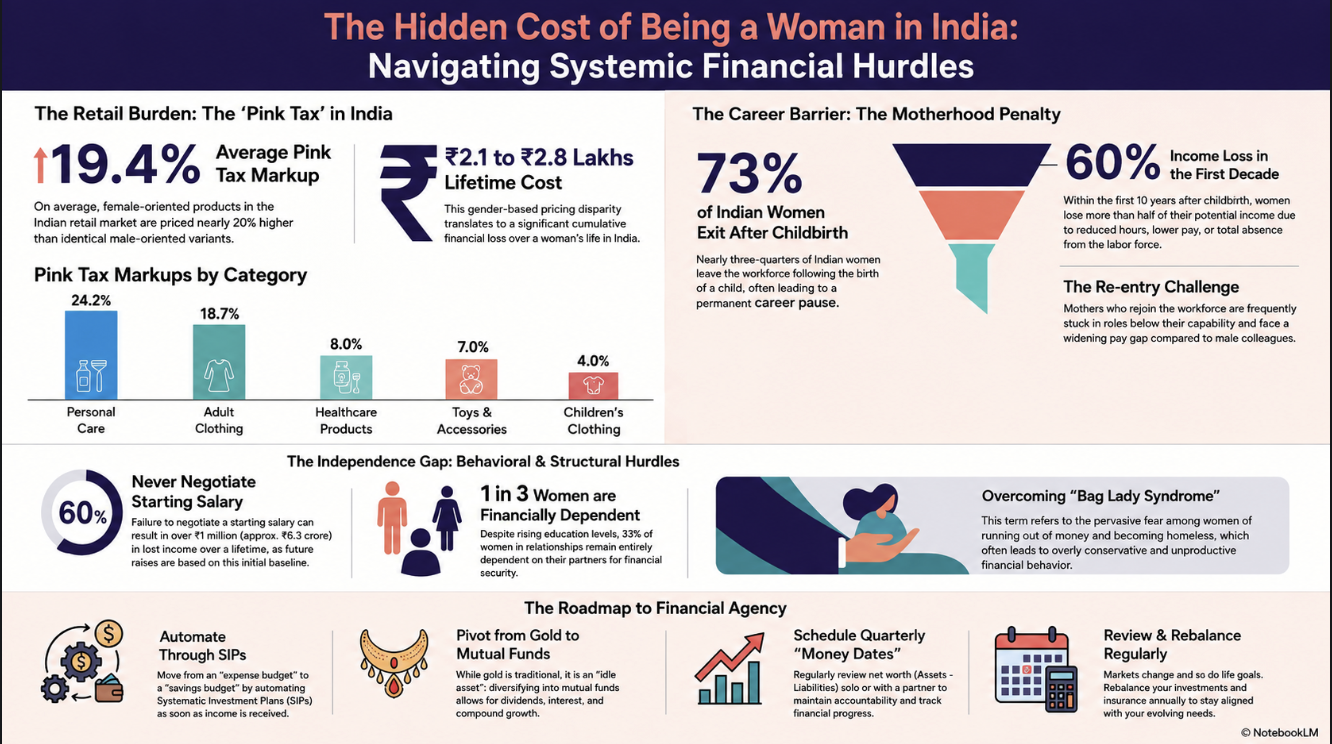
While women in India have long managed household budgets thoughtfully, modern money habits, social expectations, and everyday pricing can still create stress or slow down long-term security. Understanding where money quietly slips away helps you make calmer, more informed choices—on your own terms.
Everyday Hurdles: Pink Tax and Career Breaks
Everyday expenses don't always affect everyone equally. In India, female-targeted products often carry higher markups—known as the "pink tax"—adding up over years of routine purchases alongside career pauses or slower progression after childbirth. Recognizing these pressures early makes it easier to plan buffers rather than feeling caught off guard.
Money Anxiety and Over-Cautious Habits
When people worry about running out of money or losing independence, it is natural to feel anxious about taking financial steps. Sometimes that worry keeps money idle in low-return accounts where inflation erodes purchasing power over time, rather than putting it toward structured, goal-aligned plans.
Common Money Habits That Hold People Back
- Relying Only on Gold for Security: Holding physical gold or jewellery is familiar, yet making charges, resale spreads, and storage hassles mean it rarely works as an all-in-one financial plan on its own.
- Handing Over All Money Decisions: Leaving household money management completely to someone else can leave you unfamiliar with accounts, policies, and family finances when life changes.
- Skipping Salary & Compensation Conversations: Not negotiating pay or benefits at the start can compound into a meaningful gap over time as future raises build on that base.
- Chasing Discounts Over Real Needs: Flash sales and "buy one, get one" offers often encourage spending on things you didn't plan to buy.
- Carrying High-Cost Revolving Debt: Paying only the minimum due on credit cards or short-term credit lines can quietly drain monthly cash flow through high interest charges.
Practical Steps Toward Financial Clarity
You don't need complicated jargon or risky shortcuts to build steady financial habits. Start with small, repeatable steps:
- Balance Gold With Structured Goals: Keep cultural traditions separate from your broader financial plan, and learn how basic, diversified avenues fit specific goals rather than relying on a single asset.
- Automate Monthly Savings Early: Set aside a realistic share for savings or goals right when income arrives, instead of waiting to see what is left at month-end.
- Build an Emergency Buffer: Aim for a dedicated cushion covering several months of essential expenses so unexpected bills don't force high-interest borrowing.
- Hold Regular Money Check-Ins: Set aside calm, regular time with your partner or family to review shared expenses, insurance coverage, and upcoming milestones transparently.
- Invest in Your Own Financial Confidence: Build basic literacy around budgeting, protection, and planning—and when you want personal product advice or execution, consult a SEBI-registered or licensed professional rather than unverified tips.
Want structured frameworks and checklists to put these habits into practice? Explore WENA Programs, browse practical tools in the WENA Store, or connect with vetted specialists via WENA Implementation Partners.